A brownstone is a townhouse, but not every townhouse is a brownstone. The distinction comes down to the facade: a brownstone is built or faced with brownstone sandstone and carries the historic details that go with it, while “townhouse” simply describes the building form. That label matters because it can mean a price premium, specialized maintenance, and preservation permits you won’t face with a modern townhouse.
TL;DR:
- Verify facade material, construction date, and landmark status through records; painted brick or thin stone veneer can conceal different construction and repair needs.
- Before budgeting for facade work, confirm whether Landmarks review applies; matching stone is preferred, while cast stone or stucco is allowed only in limited cases.
- Brownstone repairs need specialists because sandstone can crack, spall, or delaminate; budget for repointing, facade work, permit fees, and possible review delays.
- Manhattan buyers should request repair permits, Local Law 11 reports, engineer signoffs, and water infiltration history, then check for board approval requirements.
Table of Contents
- Defining townhouse, rowhouse, and brownstone
- What makes a brownstone: facade, features, and repair realities
- What townhouse really covers, beyond brownstones
- How to tell when a townhouse is a brownstone
- Costs, maintenance, and resale: brownstone vs. other townhouses
- Permits and preservation rules that affect brownstone repairs
- Insider buyer checklist for Manhattan brownstones
- Charm versus convenience: what actually matters to you
- How we help you buy the right townhouse or brownstone
- FAQ
- Sources
Defining townhouse, rowhouse, and brownstone
A townhouse is a multistory, usually single-family dwelling that shares at least one wall with a neighboring home. “Rowhouse” is often used interchangeably with townhouse, though it more specifically describes a continuous row of similar attached units built together, typically in the 19th century. Both terms describe a building’s shape and construction, not its material or style.
A brownstone is narrower: it refers to a house faced in reddish-brown sandstone, and over time the name became shorthand for the whole style of rowhouse built with that material. The color is not fixed. Surviving brownstones range from deep chocolate to rust to a weathered gray-brown, and many have had sections resurfaced or repaired with other materials over the decades.
Brownstones became common in Manhattan and Brooklyn in the 19th century, when the sandstone was relatively affordable, easy to carve, and gave row housing a uniform, upscale look compared to plain brick. We still see that concentration today: brownstones cluster heavily in Northeastern cities, especially New York, while “townhouse” as a category spans far more ground.
Quick reference:
- Townhouse: a building form, attached by at least one party wall, can be any material or era.
- Rowhouse: a townhouse built in a continuous row with matching neighbors.
- Brownstone: a townhouse or rowhouse faced in brownstone sandstone, usually from the 19th century.
What makes a brownstone: facade, features, and repair realities
Brownstone itself is a type of sandstone, quarried mainly in Connecticut and New Jersey during the building boom of the 1800s, and its natural color variation means no two blocks of brownstones look quite identical. Beyond the stone, a handful of features tend to show up together on a true brownstone:
- A raised front stoop leading to the parlor floor.
- Carved lintels and cornices framing the windows and roofline.
- Decorative ornamentation such as scrollwork, rosettes, or paneled doors.
- A uniform, deep-toned facade that reads as one continuous material.
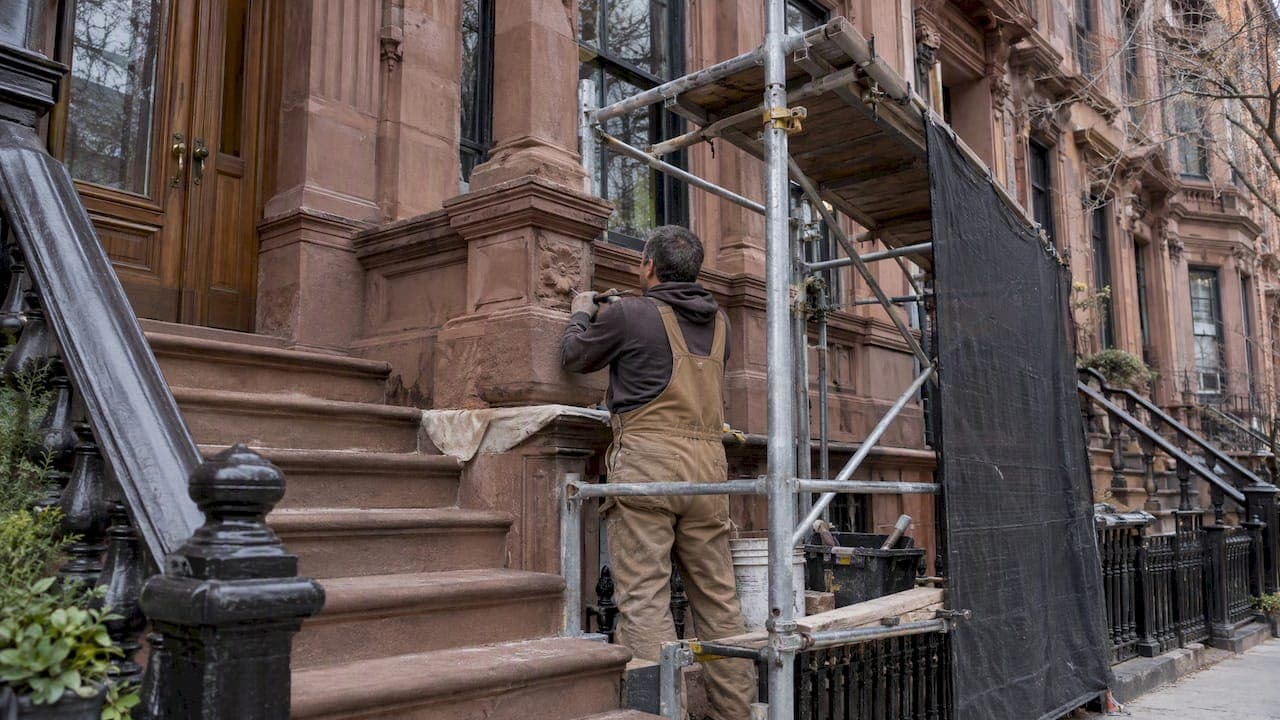
These details are also what make brownstone repair different from ordinary masonry work. Because brownstone is a sandstone, it weathers unevenly and can spall, crack, or delaminate, and fixing it is not the same job as repointing brick. According to the New York City Landmarks Preservation Commission’s restoration guidance, resurfacing a brownstone facade means re-creating carved decorative elements, and that work calls for contractors with specific experience in historic masonry, not a general contractor.
The Landmarks Preservation Commission notes that resurfacing is tightly controlled, with cast stone or stucco allowed only in limited contexts and in-kind replacement preferred wherever possible. That single fact shapes almost every brownstone renovation budget in the city: you are often restoring, not replacing, and restoration takes longer and costs more than installing new siding or brick veneer ever would.
What townhouse really covers, beyond brownstones
“Townhouse” is a much wider net than most buyers expect. It describes a building shape, attached living with shared walls, rather than any particular material, age, or style. A townhouse can be a 19th-century brick rowhouse on the Upper West Side, a stucco-fronted unit in a 1980s development, or a wood-framed home with vinyl siding in a suburban cluster.
Material and construction vary heavily by region. East Coast townhouses, especially in older Northeastern cities, tend toward masonry: brick, limestone, or brownstone. In many Western and newer developments, wood framing and modern siding are far more common, since those areas built up later and used different construction standards.
Ownership structure adds another layer buyers need to track:
- A single-family townhouse is owned outright, like a detached house, often as fee simple.
- A condo townhouse means you own your unit and a share of common elements, with a condo board.
- A co-op conversion means you own shares in a corporation that holds the building, with a co-op board approving sales.
Because townhouse definitions and materials vary so widely by region, how a given property sells, and what it costs, depends far more on location, square footage, and condition than on the word “townhouse” by itself. That is exactly why brownstone, as a narrower and more specific label, tells you more at a glance.
How to tell when a townhouse is a brownstone
A quick walk-through and a records check will usually settle the question. Run through these steps during a viewing or before you book one:
- Look at the facade color and texture. A true brownstone reads as one continuous reddish-brown or gray-brown stone, not a painted or stuccoed surface.
- Check for a raised stoop, carved lintels above the windows, and decorative cornices at the roofline.
- Confirm the building’s construction date. Most genuine brownstones date to the mid-to-late 1800s.
- Search for historic district or landmark status, since that status affects what future owners can legally change.
- Ask for any prior facade permits on file, which can confirm the original material and document past repairs.
Watch for disguises. Painted brick, stucco applied directly over masonry, or a timber backup wall behind a thin stone veneer can all make a building look like a brownstone from the sidewalk while hiding very different underlying construction and condition.
Pro Tip: Bring a flashlight and tap the lower facade gently near the stoop; a hollow or inconsistent sound can signal delamination or a prior patch job worth asking a structural engineer about before you make an offer.

Costs, maintenance, and resale: brownstone vs. other townhouses
Brownstones often command a premium over other townhouses in the same neighborhood, driven mostly by scarcity and the curb appeal of an intact historic facade. That premium is not universal, since it depends heavily on the building’s condition, its exact block, and overall market demand at the time of sale.
What is more predictable is where the ongoing costs show up. Typical line items for a brownstone owner include:
- Periodic repointing of mortar joints to prevent water infiltration.
- Facade resurfacing or stone repair, which requires masonry specialists rather than general contractors.
- Permit fees and potential delays tied to historic district or landmark review.
- Higher insurance premiums in some cases, reflecting the age and material of the structure.
The Landmarks Preservation Commission’s permit guidebook outlines two main review tracks for facade work: PMW permits for minor restorative work, and CNE reviews for work that needs a Department of Buildings permit but is judged to have no effect on protected features. Knowing which track applies to a given repair can be the difference between a project that moves in weeks and one that stalls for months.
Buyers should budget for a facade-focused inspection before closing, and sellers should keep a reserve for masonry work rather than assume the market will absorb deferred maintenance. Preference has generally shifted toward move-in-ready properties, so a brownstone needing heavy restoration may sit longer or sell at a discount compared to one with documented recent repairs, a pattern worth discussing with a broker who tracks current Manhattan market conditions.
Permits and preservation rules that affect brownstone repairs
Most brownstone facade work in a historic district needs some level of Landmarks review before it starts. The Commission’s permit guidebook distinguishes between PMW permits, issued for minor restorative work, and CNE reviews, used when Department of Buildings permits are required but the work won’t affect protected features.
Resurfacing is the area with the tightest restrictions. According to the restoration chapter of that same guidebook, in-kind replacement with matching stone is generally preferred, and substitute materials like cast stone or stucco are only acceptable in limited situations.
Before committing to a purchase or a renovation, we’d recommend:
- Requesting the building’s permit history directly from the Department of Buildings and the Landmarks Preservation Commission.
- Confirming whether the block sits within a designated historic district.
- Bringing in a preservation-savvy architect or engineer before scoping any facade work, rather than after.
Insider buyer checklist for Manhattan brownstones
Buying a brownstone in Manhattan comes with a specific due diligence list that goes beyond a standard home inspection. Before you make an offer, ask for:
- Recent masonry and stoop repair permits, along with the contractor invoices tied to them.
- Any Local Law 11 inspection reports, since facade safety filings can reveal violations or required repairs that affect your closing timeline.
- Engineer sign-offs on completed restoration work, not just contractor receipts.
- A clear timeline of past repairs and any remaining warranties.
- Disclosure on water infiltration history, a common and costly issue in older masonry buildings.
We also encourage buyers to ask directly about the ownership structure attached to the property, since a brownstone split into a condo or co-op carries board approval requirements that a single-family brownstone does not. We know how much approval timelines and building financials can shape a deal, and we build that knowledge into every closing-cost conversation with buyers.
Pro Tip: Ask your broker to pull the building’s full Local Law 11 filing history, not just the most recent cycle. A pattern of repeated facade violations tells you more than a single clean report.
Charm versus convenience: what actually matters to you
Some buyers fall for a brownstone the moment they see the stoop and the carved lintels, and we understand that pull completely. The streetscape, the proportions, the sense of history: none of that comes standard in a new build. Other buyers, reasonably, want predictable upkeep and fewer surprises, and a modern townhouse with vinyl siding or a newer facade delivers exactly that. Neither preference is wrong. It comes down to how much renovation appetite you’re willing to carry alongside the mortgage.
— Michael Carroll
How we help you buy the right townhouse or brownstone
Whether you’re drawn to a landmarked brownstone or a lower-maintenance modern townhouse, the process of evaluating the building, the board, and the true closing costs is where most buyers need the most support. We bring years of Manhattan market experience and knowledge of board-approval processes to every purchase we guide, from co-ops and condos to townhouses across all price points.

If you’re actively looking at Manhattan townhouses or brownstones, we’d welcome the chance to walk through the building’s history, permits, and true costs with you before you make an offer. Reach out through our buying an apartment page to get started.
FAQ
Are brownstones more expensive than other townhouses?
Brownstones often carry a premium tied to scarcity and curb appeal, but the exact difference depends on the block, condition, and current market rather than a fixed percentage. A well-maintained brownstone with documented repairs typically commands more buyer interest than one needing extensive restoration.
What are the townhouses in New York called?
They’re most commonly called townhouses or rowhouses, with “brownstone” used specifically when the facade is faced in brownstone sandstone. All three terms describe attached, multistory homes, but brownstone refers to material and style rather than the building form itself.
What exactly is a brownstone home?
A brownstone is a townhouse with its front built of reddish-brown sandstone, a material widely used on 19th-century rowhouses in cities like New York. The term now covers the whole style associated with that facade, including stoops, carved lintels, and cornices.
What are the pros and cons of living in a brownstone?
Brownstones offer historic character, strong curb appeal, and often a premium resale position, but they come with specialized maintenance needs like repointing and facade resurfacing that require masonry specialists. Preservation rules in historic districts can also limit repair options and add permit review time compared to a modern townhouse.
Sources
- New York City Landmarks Preservation Commission — Permit Guidebook (Introduction)
- Restoration — LPC Permit Guidebook, Chapter 1
- What Is a Townhouse? Everything You Need to Know | Architectural Digest
- BROWNSTONE | definition in the Cambridge English Dictionary