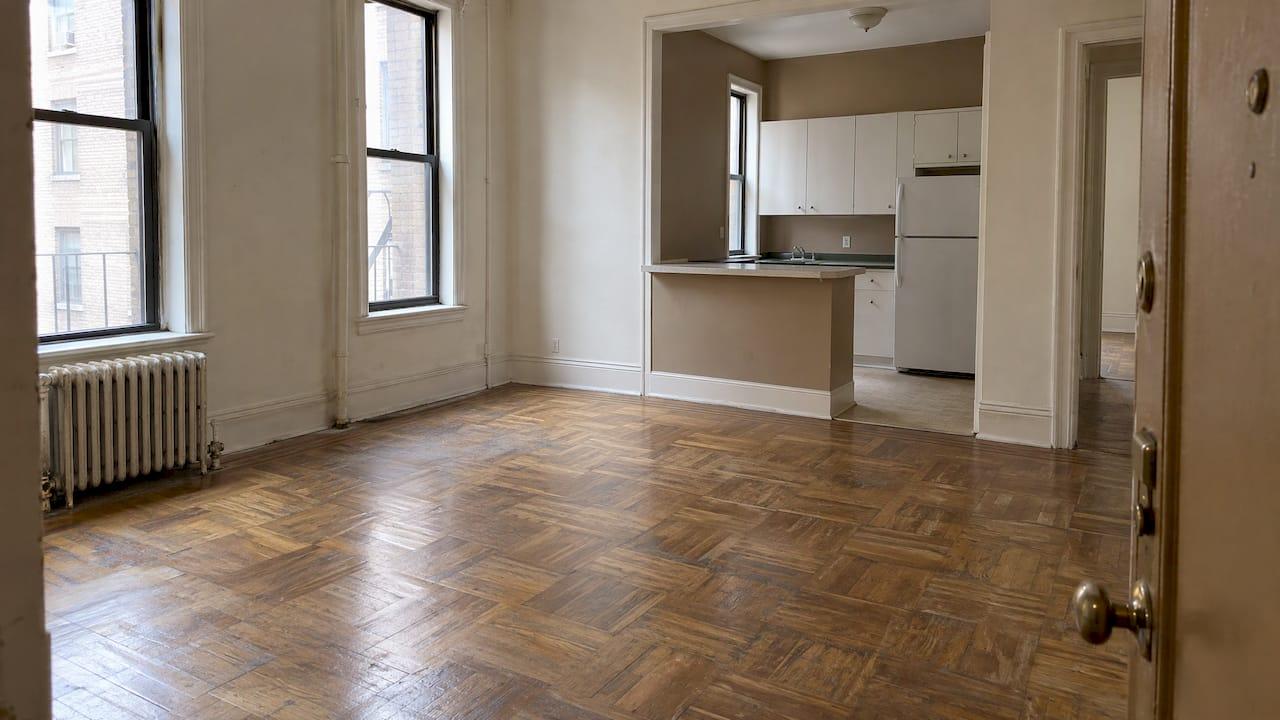
A sponsor unit in a co-op is an apartment that the original converter of the building (the sponsor) still owns and never sold to a tenant or an individual owner. You buy it under the building’s offering plan, not as a private resale, and that changes three things: whether you face a board interview, who pays which taxes at closing, and how a lender looks at the building. Below we explain each, with the figures and documents to confirm before you sign.
TL;DR
- A sponsor unit is an unsold apartment held by the entity that converted the building from rental to co-op. It is sold under the offering plan, not as a resale.
- Board approval can be waived, but only if the offering plan says so. Some plans limit the waiver to the original sponsor or end it after a set period or share threshold.
- Budget for extra closing costs. Sponsor contracts commonly shift New York City and State transfer taxes to the buyer, and the signed contract controls.
- Lenders still underwrite the loan and review the building, including how much of it the sponsor owns.
- Have an attorney read the whole offering plan and its amendments before you commit.
Table of Contents
- What a sponsor unit in a co-op actually is
- Sponsor unit versus resale: the differences that matter
- Do you skip board approval on a sponsor unit?
- What a sponsor purchase costs at closing
- Price, condition and the premium question
- Financing a sponsor co-op
- What to review before you make an offer
- Is a sponsor unit right for you?
- Our perspective
- Work with Michael on your Manhattan purchase
- FAQ
- Sources
What a sponsor unit in a co-op actually is
When a New York rental building converted to a co-op, existing tenants were offered the chance to buy their apartments. Where tenants declined, the apartments stayed with the converter, who usually kept renting them. Those are sponsor units: they typically reach the market once the tenant moves out and the sponsor decides to sell.
The word “sponsor” can mislead. It is not a bank or a guarantor. It is the owner of the unsold shares, and after the sale you own shares in the co-op corporation and a proprietary lease, as with any co-op purchase. If you are still sorting out how a co-op differs from a condo, our guide on co-op versus condo closing costs in Manhattan is a good starting point.
Sponsor units are not limited to old conversions. A building can have a sponsor with unsold shares for many years, which is why the details live in each building’s documents rather than in a general rule.
Sponsor unit versus resale: the differences that matter
A sale by the sponsor is made under the offering plan. A sale by an individual owner is a resale: according to the New York Attorney General, it is not regulated by the Attorney General and does not require a new offering plan. That one distinction drives most of the practical differences.
| Topic | Sponsor unit | Resale from an owner |
|---|---|---|
| Governing document | Offering plan and its amendments | Proprietary lease, bylaws, house rules |
| Board approval | Often waived, if the plan reserves that right | Required in almost every co-op |
| Transfer taxes | Often passed to the buyer by contract | Usually paid by the seller |
| Down payment | Sometimes as low as 10%, set by sponsor, documents and lender | Commonly 20% to 25% |
| Condition | Often original or as-is | Varies, often renovated |
| Price | Can carry a premium | Set by market comparables |
| Lender review | Includes sponsor ownership and project eligibility | Includes building finances and rules |
The table shows what is typical, not what is guaranteed. Every row depends on the building and on the contract you sign.
Do you skip board approval on a sponsor unit?
Often, but not automatically. The waiver does not come from custom. It comes from the offering plan, which typically reserves to the sponsor and holders of unsold shares the right to sell or sublet without board approval.
The same source notes that the waiver can lapse. Some plans limit it to the original sponsor. Some end it after a stated period or once a share threshold is reached. Some treat a successor who bought in bulk differently from one who did not. Where the reservation no longer applies, you enter the ordinary approval process.
So the practical steps are:
- Ask for the offering plan and every amendment before you make an offer.
- Find the clause on sales and sublets by the sponsor and holders of unsold shares.
- Have your attorney confirm in writing whether it applies to the seller of this specific unit.
- If it does not, prepare a full application. Our guide to buying a co-op in NYC walks through the package, financial review and timeline.
A waived interview also does not mean a waived building. Even after you buy, you follow the building’s rules and bylaws, including restrictions on subletting.
What a sponsor purchase costs at closing
This is where buyers are most often surprised. We spend a lot of time on closing costs with clients because the headline price is only part of the cash needed.
Transfer taxes
NYC sponsor contracts commonly shift New York City and New York State transfer taxes to the buyer, although the signed contract controls. The same report lists the city rate as 1% for purchases under $500,000 and 1.425% for $500,000 or more, plus a 0.4% state transfer tax.
A worked example at those rates: on a $900,000 sponsor co-op, the city tax at 1.425% is $12,825 and the state tax at 0.4% is $3,600, so about $16,425 in transfer taxes that a resale buyer would not normally pay. Confirm the rates and who pays in your contract. Our page on NYC transfer tax rates and worked examples goes deeper.

Mansion tax
The state mansion tax is generally a buyer cost on residential purchases of $1 million or more. Brick Underground’s closing cost guide says it starts at 1% and rises at higher price thresholds. See our breakdown of mansion tax rates and brackets for the current schedule.
Other sponsor-specific charges
According to one New York law firm, sponsor buyers may also pay sponsor attorney fees, working-capital contributions, move-in deposits, processing fees and renovation costs. Another guide notes that a sponsor buyer typically pays one to three months of common charges into the reserve fund at closing and the full mortgage recording tax, whereas in a resale a CEMA (a loan assignment that can reduce that tax) may save significant money.
That last point matters when you compare options. A resale where a CEMA is available can narrow the cost gap with a sponsor unit, which is why we compare the total cash to close on each, not just the price.
Price, condition and the premium question
Sponsor units can sell at a premium. Jonathan Miller of Miller Samuel told Brick Underground that, with condition held constant, a sponsor unit might command 5% or even 10% more. The same article notes that an unusually low price can signal serious condition problems.
The lesson is to compare like with like. Many sponsor units are in original condition, so a fair comparison is against resales you would also renovate, with your renovation budget added to the sponsor price. We build that comparison for buyers before an offer goes in, using recent sales in the same building and the same line when we can.
Financing a sponsor co-op
Co-op financing is a share loan secured by your shares and proprietary lease, and co-ops may limit financing, require post-closing assets and restrict subletting. Most co-ops want roughly 20% to 25% down. A sponsor co-op may sometimes permit 10%, but the actual requirement is set by the sponsor, the building documents and your lender.
Two points to plan around:
- Underwriting still applies. No board interview does not mean no lender review. The lender will look at your income, assets and credit, and also at the building.
- Sponsor ownership matters to banks. The more units that are unsold or rented, the lower the owner-occupancy ratio. Banks typically like to see more than 50 percent of units owner-occupied, and a weak ratio can signal a transient building.
Buyers with non-traditional income, or foreign nationals, often need a lender who works outside standard guidelines. Some lenders offer New York investment property loans including options for foreign nationals and non-traditional borrowers, and it is worth asking early whether a particular building is eligible before you spend money on legal work.
If you want to understand how a board or lender will read your own finances, see our piece on post-closing liquidity in NYC co-ops.
What to review before you make an offer
The Attorney General’s guidance is clear on the basics: read the entire offering plan, consult an attorney before signing, and put material sponsor representations in the contract or a written rider instead of relying on spoken promises. It also advises reviewing the previous year’s board minutes and the most recent financial report, and inspecting the unit’s physical condition.
Our working checklist builds on that:
- Offering plan and amendments. Look for sponsor rights, voting control, transfer restrictions and how maintenance is allocated.
- Sponsor ownership. How many units and what percentage of shares remain unsold, and how many are rented.
- Board control. State rules limit how long a sponsor can control the board: no more than five years from the co-op’s closing, or until the sponsor owns less than 50 percent of unsold shares, whichever comes first.
- Annual amendments. Sponsors who keep selling must file them, and they disclose units owned, maintenance charges and rents received, according to the same source.
- Financials. A buyer should review two to three years of audited financials and board minutes for assessments, litigation, capital projects, maintenance increases, reserves and underlying mortgages.
- Condition. Confirm what the sponsor will and will not repair, in writing.
Our article on reading a building’s financial statements shows what to look for in the numbers. If your attorney is reviewing the plan, we review the business side: pricing against comparable sales, the building’s reserves and the realistic total cost.
Is a sponsor unit right for you?
A sponsor unit can suit buyers for whom a board interview is a hurdle: those with complex finances, a purchase for a family member, or limited time. The reported advantages are avoiding board approval and potentially more flexible financing. The things to weigh are the premium, the added transfer taxes, original-condition apartments and lender views on sponsor ownership.
Framing it as a checklist, a sponsor unit is a strong fit when:
- the offering plan clearly preserves the board waiver for this seller;
- sponsor ownership in the building is low enough that lenders will lend;
- the price, after adding transfer taxes and renovation, still compares well with resales;
- the building’s financials are healthy.
When those four line up, it can be an excellent route into a Manhattan co-op. When one is missing, a resale or a condo may serve you better. We would rather tell you which at the start. Our guide to buying a condo in NYC is useful if you want to compare.
Our perspective
Sponsor units are rarely good or bad in themselves. They are a different transaction with different paperwork, and the buyers who do well are the ones who read it before they fall in love with the apartment.
As a board president on the Upper West Side, I have sat on the other side of the table, so I know what a board, a lender and a managing agent look at in a building. For a sponsor unit, that means looking past the apartment to the sponsor’s share of the building, the reserves, the plan’s language and the true cash needed at closing.
Our approach is to lay out the full cost, including transfer taxes the seller would normally pay, compare it with resales on the same block, and make sure you have the time to decide. You should never feel rushed into a purchase this size.
Michael Carroll
Work with Michael on your Manhattan purchase
Michael J. Carroll is a licensed real estate salesperson with Brown Harris Stevens, based on the Upper West Side and representing buyers across Manhattan. If you are weighing a sponsor unit against a resale, we will walk you through the offering plan’s key terms, the building’s financials and the full closing budget, working alongside your attorney.

See how we help buyers on our buying an apartment page, or reach out through Michael’s site to talk through your situation.
FAQ
What is a sponsor unit in a co-op?
It is an apartment still owned by the entity that converted the building from rental to co-op, usually the developer or original landlord. It was not sold to a tenant, so it is sold later under the offering plan. It is not a resale from an individual owner.
Do sponsor units in NYC co-ops have no board approval?
Many do, but only when the offering plan reserves that right and it still applies to the seller. Some plans end the exemption after a period or share threshold. Your attorney should confirm the clause before you make an offer.
Who pays transfer taxes on a sponsor co-op?
Sponsor contracts commonly shift New York City and State transfer taxes to the buyer, though the signed contract controls. At current reported rates that is 1.425% city tax on purchases of $500,000 or more, plus 0.4% state tax.
Is a sponsor unit cheaper than a resale?
Not necessarily. Sponsor units can carry a premium of 5% to 10% when condition is comparable, and they often need renovation. Compare the total cost, including taxes and work, against nearby resales.
Can I get a mortgage on a sponsor unit?
Yes, but the lender still reviews you and the building. High sponsor ownership can limit lending, so ask a lender about the specific building early.
Sources
- Brick Underground: the pros and cons of buying a co-op sponsor unit
- New York Attorney General: Before You Buy a Co-op or Condo
- Nacmias Law Firm: Do co-op sponsor units skip board approval?
- Brownstoner: Sponsor unit, what it is and how it can affect you
- Brick Underground: the buyer’s and seller’s guide to NYC closing costs
- Agarunov Law: sponsor unit purchases in NYC
- NY Real Estate Prep: NYC sponsor units vs resale
- Moye Law: co-op or condo in New York
- Cooperator News: the New York Attorney General’s Office
- Agarunov Law: NYC co-op buying guide
- 1st NWM: New York investment property loans